Explain the Differences in Breathing Rate Before and After Exercise
The subjects were separated into male and female to look for a difference between the genders breathing and heart rate. 57 is shown in graph 2.

Critical Relationship Between Respiratory Rate Heart Rate And Cadence Garmin Blog
The more oxygen your body needs to perform the exercise the higher your breathing and heart rate will be.

. For the breathing rate I would say that exercise for 5 minutes would be better than 2 minutes as after 2 minutes the breathing rate did not go overly higher but after 5 minutes the breathing rate would have been a lot higher there for the time in which the breathing rate went back to normal would have took longer although this would not really change the results much. So after exercise your heart rate will be higher but slowly even out as your body returns to homeostasis. After anaerobic exercise your body takes longer to recover from that oxygen debt and your pulse may remain.
Heart ratebeats per minute At rest During exercise Immediately after exercise. Intense exercise may increase the breathing rate up to 40 or 50 breaths per minute. Ventilation increases linearly with increases in work rate at submaximal exercise intensities.
Bromothymol blue is in indicator for carbon dioxide which means that it will change color if carbon dioxide is present. However physically active people often have a lower heart rate than 60 while at rest. Heart Rate is defined as the amount of times a persons heart beats in one minute.
After they do some exercise record their rate of breathing every minute until it returns to the normal resting value. A resting heart rate is the persons heart rate prior to any activity or exercise. After 2 minutes adding this to your table.
During exercise ventilation might increase from resting values of around 56 litre min 1 to 100 litre min 1. It may take 10-20 minutes post exercise for the breathing rate to return to normal with hypertrophy training because of this. If you have a pulse meter you may be able to record pulse rate.
Breathing rate breaths per minute At rest During exercise Immediately after exercise 2 min after exercise 4 min. As activity increases the heart rate will increase in speed. It also refers to specific physiological processes or states occurring after exercise that are distinct from the physiology of either the exercising state or the resting state In this context recovery of the cardiovascular.
Most people are familiar with how their bodies feel during exercise. By contrast 13 of 19 studies in which final VO2 was 92-100 of highest VO2 were followed by relative rapid shallow breathing. Although you havent begun to tax your muscles.
Explain the difference in question 2 What is the. The heart beats faster and it becomes harder to breathe. 2 min after exercise.
The rate of heartbeat decreases as physical activity increases. Hence breathing rate increased in order to get the blood oxygenated and get rid of this carbon dioxide. At the onset of exercise the brain signals increases in heart and breathing rates in anticipation of the increased need for oxygen and carbon dioxide exchange of exercise.
Thus the heart pumped at a quicker rate to get this oxygen into its cells. Breathing rate increases with in increase of physical activity. When you exercise at high intensity youre in an anaerobic or oxygen-deprived state.
Once exercise begins circulating levels of the hormone epinephrine also referred to as adrenaline increase. Compare the time it took the bromothymol blue solution to change color before exercise and after exercise. This increase stimulates ventilation as well.
Blood pH The pH of the blood is normally 735 to 745 a narrow range. The table also shows that two of the participants had the same increase in heart rate after exercise pic Graph 1 Mean difference in the increase of heart rate after exercise The median heart rate pre exercise was 77. To cope with this extra demand your breathing has to increase from about 15 times a minute 12 litres of air when you are resting up to about 4060 times a minute 100 litres of air during exercise.
This is a response to increased work by the muscles and an escalating need for oxygen throughout the body. Exercise to improve aerobic fitness elevates the respiration rate but not as high as more intense exercises. During exercise your body will need more nutrients because your tissues are expending more.
The rate of breathing increases as physical activity increases. During exercise or after exercise you can monitor your heart rate. Muscular endurance training has a greater reliance on oxygen for energy than hypertrophy training the work intervals are longer and the rest periods are shorter allowing a minimum of recovery so the response of the respiratory system is much.
Before exercise your normal heart rate supplies you body with sufficient Oxygen. 9 and post exercise 129. Click here to find your maximum heart beat based on the age and exercise intensity.
The hypothesis of the experiment sought to test whether there was a notice able difference in the effect of aerobic exercises between the pulse rates of athletes and non-athletes. Heart Rate Before and After Exercise. When you exercise and your muscles work harder your body uses more oxygen and produces more carbon dioxide.
Oxygen consumption also increases linearly with increasing work rate at submaximal intensities. Graph 2 also shows there is an increase in the heart rate after exercise. Recovery from exercise refers to the time period between the end of a bout of exercise and the subsequent return to a resting or recovered state.
The respiration rate may remain faster and deeper than normal for up to 40 minutes after the exercise ends. 4 min after exercise. After an exercise the heart rate gradually decrease and oxygen intake occurred at a normal level.
Average and difference of pulse rate before and after exercising. Once you have finished exercising your breathing and heart rate slowly return to normal and the more exercise you perform the. Why Breathing Rates Increase Before Exercise.
While working out the target heart rate should be no more than 50 to 85 of your maximum heart beat. There was no systematic difference between breathing pattern during exercise and recovery in tests where final O2 consumption VO2 was 45-92 of the subjects highest VO2. In order to perform physical activity your muscles require oxygenated blood to circulate at an increased rate.
Figure 3 shows the aerobic exercise significantly increased the heart rate by 68 and the breathing rate by 58 imme- diately after the exercise compared to the nonexercise trials.
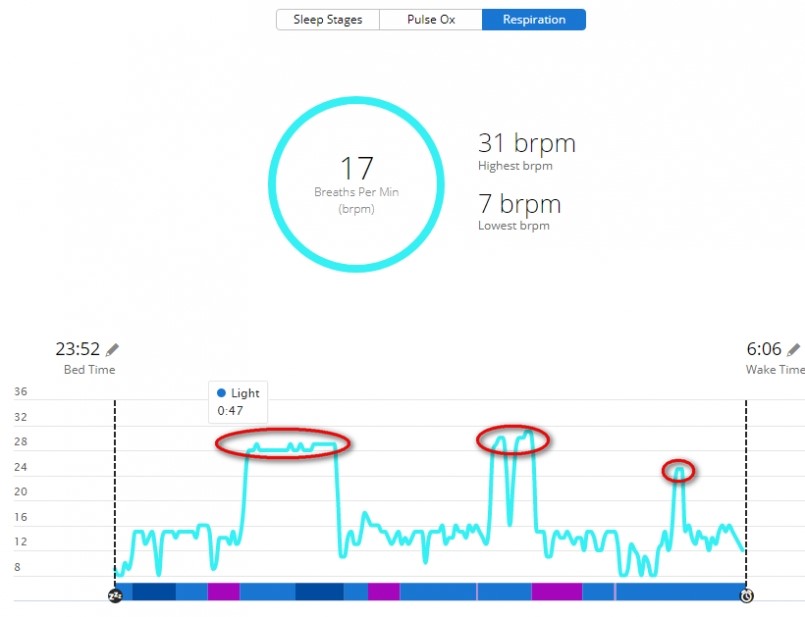
Critical Relationship Between Respiratory Rate Heart Rate And Cadence Garmin Blog
What Does A High Respiratory Rate Mean Whoop
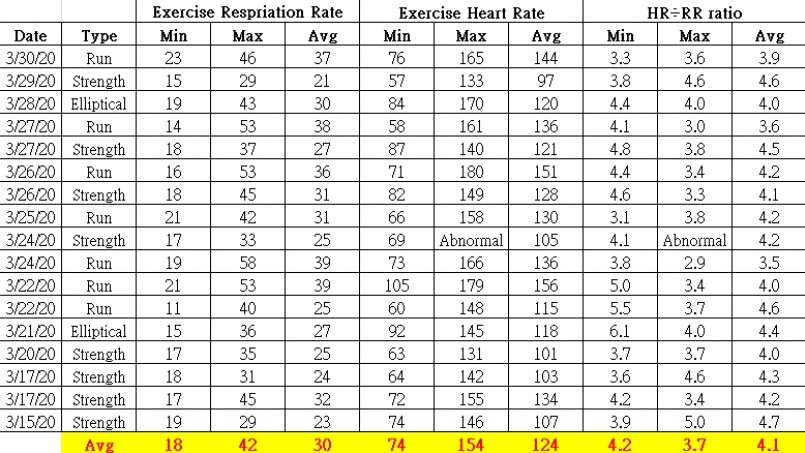
Critical Relationship Between Respiratory Rate Heart Rate And Cadence Garmin Blog
No comments for "Explain the Differences in Breathing Rate Before and After Exercise"
Post a Comment